Minnesota’s New Hemp Licensing Rules: What Businesses Need to Know Ahead of October 2025
Minnesota’s New Hemp Licensing Rules: What Businesses Need to Know Ahead of October 2025
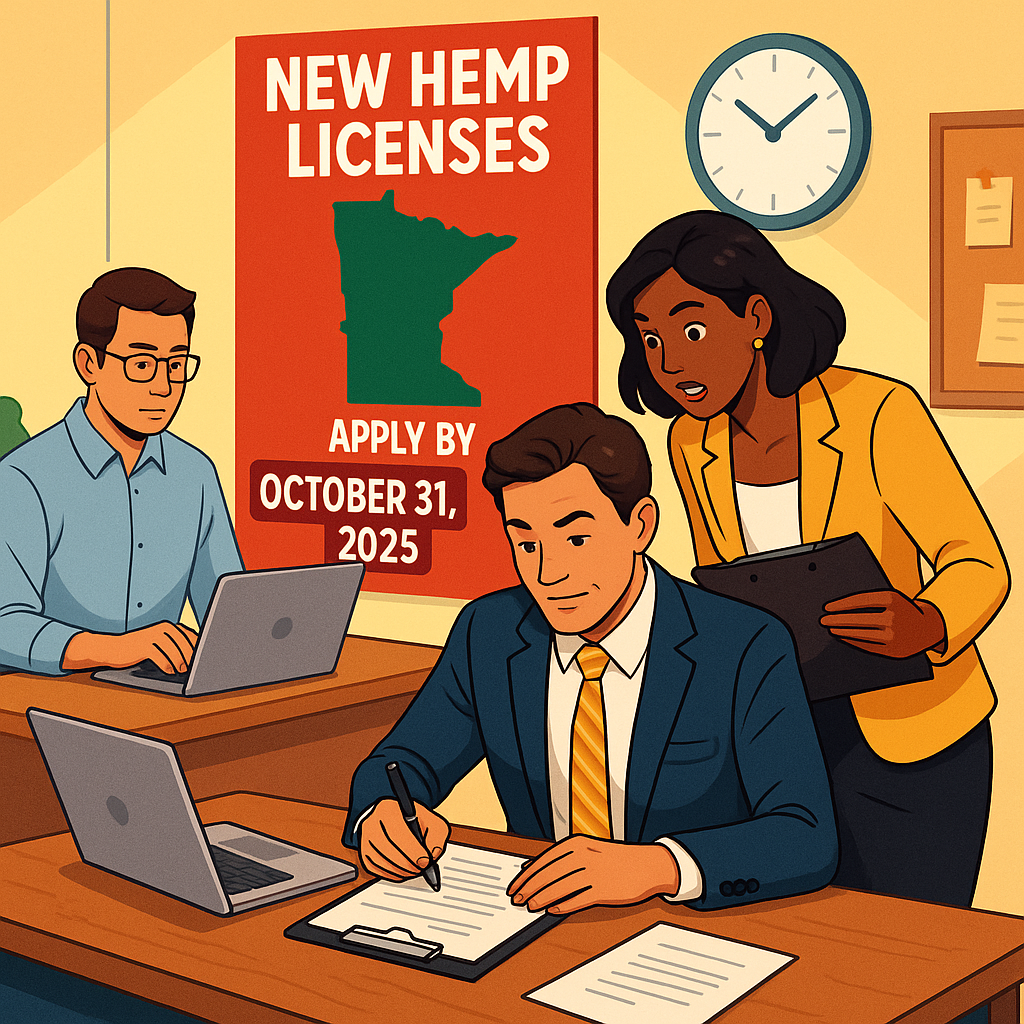
Minnesota is entering a new era of cannabis regulation. Beginning October 1, 2025, through October 31, 2025, the state’s Office of Cannabis Management (OCM) will open the licensing window for Lower-Potency Hemp Edible (LPHE) businesses. This includes manufacturers, wholesalers, and retailers.
If you’re already operating in Minnesota, or considering entering the market, this is a pivotal time. Here’s what you need to know about the transition from hemp registration to licensing, the requirements for LPHE licenses, and how these changes affect both local and out-of-state businesses.
The OCM always provides a plethora of information about upcoming application processes for all cannabis, including hemp. In this blog, we’ll bring it all together and answer the following questions:
- What are Lower-Potency Hemp Edibles (“LPHEs”)?
- What will the transition into this new LPHE program look like?
- Can LPHEs from out of state be sold in Minnesota?
- What are the LPHE application requirements?
- Which businesses can receive LPHE licenses?
What Are Lower-Potency Hemp Edibles (LPHEs)?
Under Minnesota Statutes, Chapter 342, LPHEs are tightly defined:
- Edibles: Up to 5mg of Delta-9 THC per serving and 50mg per package
- Beverages: Up to 10mg of Delta-9 THC per container, including multipacks and kegs
- Cannabinoid ratio: Delta-9 THC cannot exceed a 20:1 ratio against all other artificially derived cannabinoids (minimum 95% purity)
- Synthetic cannabinoids banned: THC-P, THC-O, and HHC are prohibited
- Other forms: Includes hemp-derived tinctures and products designed for on-site consumption
It’s important to distinguish LPHEs from hemp-derived consumer products (HDCPs), such as dried flower and vapes. While HDCPs don’t have potency limits, they must pass through Minnesota’s regulated cannabis supply chain.
Transitioning From Registration to Licensing
Minnesota’s old hemp-derived cannabinoid registration system (under Section 151.72) officially closed on August 31, 2025. Going forward, all hemp operators must apply for LPHE licenses.
Here’s how the transition works:
- Pre-April 14, 2025 registrants: Can keep operating and convert to LPHE licenses by submitting full applications.
- Post-June 1, 2025 registrants and new businesses: Eligible to apply during October 2025.
- Deadline: Businesses must apply before October 31, 2025 or risk enforcement.
After October, the OCM will take action against unlicensed sellers unless they are actively applying for or already hold a cannabis or LPHE license.
Can Out-of-State Businesses Sell in Minnesota?
The short answer: not directly.
On September 24, 2025, OCM representatives clarified that:
- The OCM does not license out-of-state businesses.
- Direct-to-consumer online sales are prohibited.
- Out-of-state manufacturers must work with a Minnesota-licensed cannabis or LPHE wholesaler to import products.
This is a major shift for out-of-state hemp companies that were once allowed to register under the older Section 151.72 framework.
The Product Transition Period
To ease the transition, OCM created a Product Transition Period through December 31, 2025. During this period:
- Retailers may keep purchasing compliant hemp products from manufacturers not yet licensed as LPHE businesses.
- Retailers may sell those products if they meet Section 151.72’s packaging, labeling, and testing requirements.
After December 31, 2025, Chapter 342 rules will govern all operations. Manufacturers should prepare now by selling off any remaining non-compliant stock.
LPHE Licensing Applications: October 1–31, 2025
Businesses may apply for the following licenses:
- LPHE Retailer
- LPHE Manufacturer
- LPHE Wholesaler
Core Requirements for All Applicants
- Proof of trade name registration (Minnesota Secretary of State)
- Valid photo ID (21+)
Additional Requirements (depending on license type)
- Liability insurance certificate
- Vehicle or general liability coverage
- Labor peace agreement with a bona fide labor organization
- Site diagram (required for in-state operations)
- Certification from an engineer or hygienist if performing cannabinoid extraction/conversion
- Surety bonds/insurance covering cargo and personal injury risks
Required Plans & Documentation
Applicants must also submit operational plans, including:
- Storage & inventory plans
- Customer complaint & recall process
- Age verification procedures
- QA/QC & sanitation plan
- Lighting & pest control strategies
- Display and security plans
- Site diagrams
Final Thoughts
Minnesota’s new LPHE licensing framework represents a major regulatory milestone. With the old registration system gone, businesses must act quickly to apply during the October window—or risk enforcement actions.
The OCM has provided extensive guidance, including:
- Conversion Guide for registrants
- Citizen Portal Instructions
- LPHE Licensing Guide
- “From Start to License” Roadmap
- Licensing Chart
- Site & Operations Worksheet
For hemp operators, October 2025 isn’t just another deadline—it’s the official launch of Minnesota’s fully regulated hemp market.
September 30, 2025

This article was written by Kight Law attorney Amber Lengacher. Kight Law represents hemp businesses in the US and throughout the world.
This is literally a targeted killing off of small hemp operators and hemp farmers by medical lobbysists, which are now medical/rec lobbyists. One of the most corrupt programs in the country.