Texas Hemp Industry Faces New Threat from Governor Abbott’s Executive Order
Listen to a short podcast about this article on the YouTube video below or by clicking here.
Texas is the largest hemp market in the United States, making it one of the most important states for hemp businesses nationwide. What happens in Texas often sets the tone for the rest of the country. That’s why the latest move by Governor Greg Abbott has the entire hemp industry on edge. (For background on the hemp battle in Texas, click here, here, and here to read our analysis.)
What Happened?
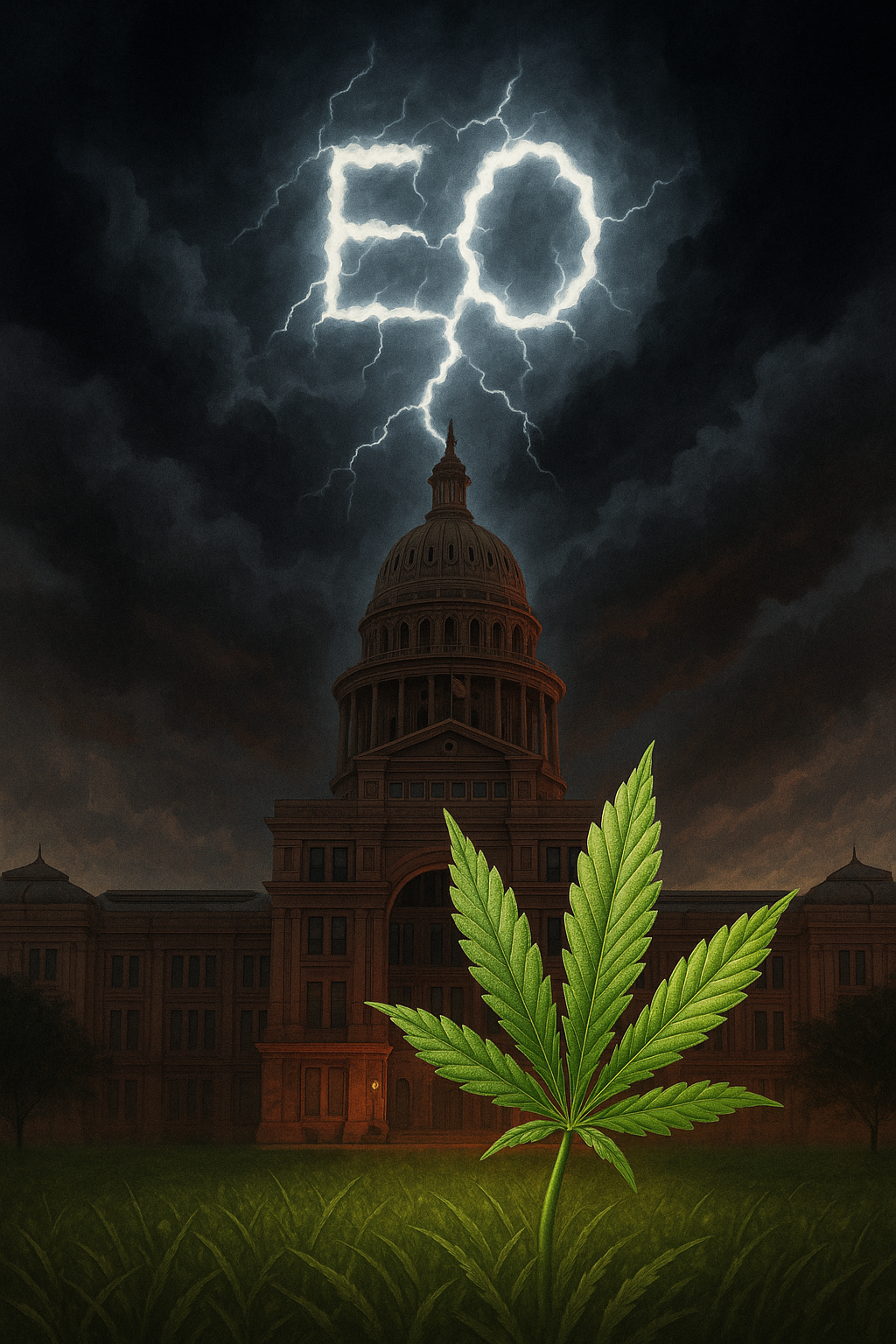
Governor Abbott issued an Executive Order (EO) that could effectively wipe out sales of THCa hemp flower in Texas. This comes on top of the state legislature’s earlier ban on cannabinoid vapes—already a major revenue hit for hemp businesses.
The EO has two main parts:
-
Age Restrictions: Effective immediately, Texas is requiring age-gating for hemp products. Most responsible hemp businesses already support this measure, and it’s a positive step for keeping products away from minors.
-
New Testing Rules: The real problem lies here. The EO directs the Texas Department of State Health Services (DSHS) to change how hemp products are tested. Instead of just looking at delta-9 THC, labs will soon be required to measure total THC—which means delta-9 THC plus its precursor, THCa.
Why This Matters
On paper, this sounds like a technical tweak. In reality, it’s a game-changer. As readers of this blog know, harvested hemp flower often has very low levels of delta-9 THC (under the legal 0.3% limit) but higher levels of THCa, which converts into THC when heated. If regulators apply a “total THC” standard, most THCa flower will suddenly be considered illegal in Texas.
Here’s what the EO states regarding THCa:
“DSHS shall, within 10 business days begin reviewing existing agency rules for possible revision and update, including: Revising testing requirements under 25 TAC §§300.301-300.303 to ensure that tests measure the total delta-9 THC content of a hemp-derived product by accounting for both delta-9 THC and the conversion of tetrahydrocannabinolic acid (THCA).“
This is clearly setting up a THCa flower ban. Although one could argue that DHSH is merely “reviewing” for “possible” revisions and updates and is not mandated to change the testing requirements, the phrase “to ensure” means that the Governor expressly intends to implement testing that accounts for total THC (ie, post-decarboxylation). One could also argue that this is merely a requirement for how to test and that it does not necessarily mean that hemp products with total THC (ie, post-decarboxylation) exceeding 0.3% will be prohibited. But that is wishful thinking.
This doesn’t just hurt the Texas hemp industry. Hemp companies around the country who sell flower into Texas could lose access to their biggest market.
Is THCa Flower Banned Right Now?
Not yet. The EO instructs DSHS to revise its testing regulations within 10 days, so the ban isn’t official today. But make no mistake: the Governor’s clear intent is to shut down the THCa flower market. From this point forward, possessing or selling THCa flower in Texas has become extremely risky. I would not be surprised to see this EO being used as a pretext for raids even before the new DSHS rules come out.
Can a Lawsuit Fix This?
It’s possible that the industry will challenge the EO in court. However, lawsuits against similar executive orders in other states have not had much success recently. Betting on the courts is risky, and relief is far from guaranteed.
What Hemp Businesses Should Do
-
Prepare for disruption: Expect the Texas market for THCa flower to shrink or vanish.
-
Diversify products: Explore other hemp products that may not be targeted under these rules.
-
Stay compliant: Age-gating is now mandatory. Businesses that don’t comply could face enforcement action.
-
Watch for updates: The hemp regulatory landscape in Texas is changing fast.
The Bottom Line
Texas has always been a bellwether state for hemp, and this Executive Order is a major blow. While age restrictions are reasonable and supported by the hemp industry, the shift to “total THC” testing could devastate the market for THCa flower. For now, the best approach is to stay informed, adapt quickly, and prepare for legal and regulatory challenges ahead. Contact us if you want to discuss this development and its impact on your business.
Here is the EO in full:
 Loading...

 Reload document
  Open in new tab
 September 10, 2025

ATTORNEY ROD KIGHT REPRESENTS CANNABIS BUSINESSES THROUGHOUT THE WORLD.
Rod Kight is an international cannabis lawyer. He represents businesses throughout the cannabis industry. Additionally, Rod speaks at cannabis conferences, drafts and presents legislation to foreign governments, is regularly quoted on cannabis matters in the media, and is the editor of the Kight on Cannabis legal blog, which discusses legal issues affecting the cannabis industry. You can schedule a call with him by clicking here.
If the Governor can create new laws by signing an EO that hands over the legal framework to state agencies, why go through the legislature? Is this even constitutional (Texas and U.S.)? I can see some things being OK via EO, but the entire industry being governed by two agencies?
Good point, Carol. Note that I am not an expert on Texas constitutional or administrative law. The Texas Governor is authorized by statute to issue executive orders under certain circumstances, including when a disaster is declared. That is not the case here. Instead, the Governor appears to rely on the fact that certain agencies under the executive branch are authorized to promulgate regulations for public health and safety, and he styles this executive order in those terms. Since the Governor is the head of the executive branch, he has authority to direct these agencies to review and, where necessary, change or issue rules/regulations. I don’t know if this particular executive order goes beyond the scope of the Governor’s authority – that’s a question for Texas administrative law experts – but my guess is that it is probably within his authority. – Rod
Rod, Everyone seems to be saying the age-restriction is effective immediately but the first provision of this order seems to clearly state a rulemaking is directed and, in my experience, that takes weeks if not months depending on public notice and comment periods. As much as it might be a directive for that to be the end result of the rulemaking, am I crazy for thinking it is not effective until the rulemaking is done? Did I miss something elsewhere in the Order?
Mat – Good question. The executive order is a bit unclear on whether or not age-gating is immediately in effect or after rulemaking. I recommend going ahead and implementing age-gating protocols. – Rod