Is HHC Legal? Understanding Its Status Under International Law
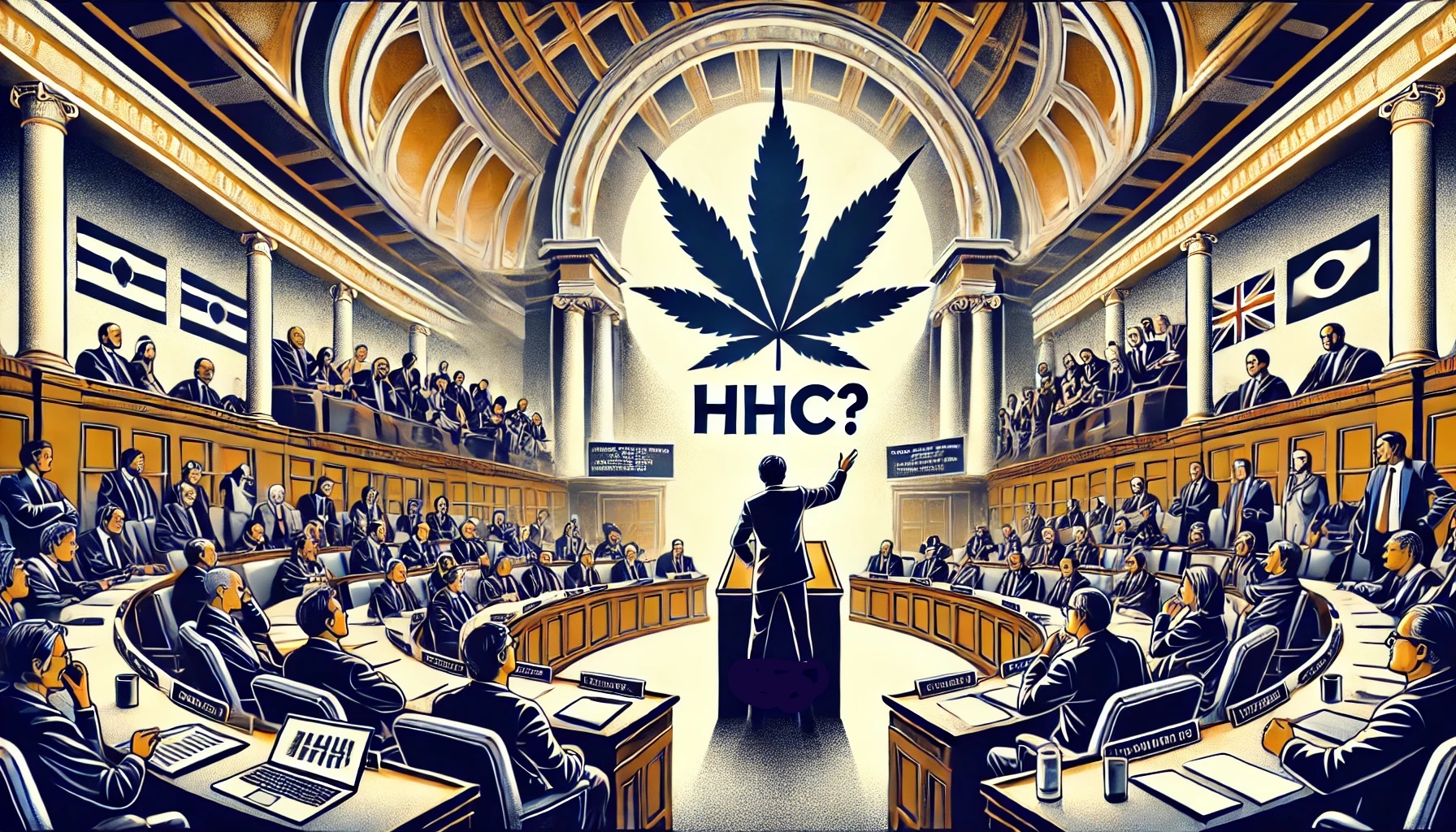
Editor’s note – This article is part of our continuing series on international legal developments in cannabis law. Kight Law attorney Anthony Traurig, based in Europe and experienced internationally through his work with CannIntelligence, discusses the rapidly changing legal landscape for HHC in the EU and beyond.
The UN Commission on Narcotic Drugs (CND) is meeting in March in Vienna with one agenda item that will be of significant consequence for the global cannabinoid industry – whether to place hexahydrocannabinol (HHC) in Schedule II of the UN Convention on Psychotropic Substances. And one major voting bloc – the European Union – has already made its vote clear.
If HHC becomes scheduled, it will have many different ramifications for the cannabinoid; some will be very direct, while others might not even be known yet.
What does this mean for HHC legality?
HHC would represent only the second naturally-occurring cannabinoid – besides THC – to be specifically scheduled under international law. (Although there is some debate over whether HHC can be considered a naturally occurring cannabinoid, scientists claim to have identified HHC in trace amounts in the cannabis plant.)
If HHC were to be scheduled, it would mean that all 184 party countries to the convention would be obliged to limit its use to scientific and medical purposes. This would include requiring a medical prescription to supply it and a licensing regime for its production and distribution.
Since HHC is currently sold as a recreational product, this restriction would effectively act as an international ban on the cannabinoid.
To be sure, though, not all countries take their obligations under the UN conventions as seriously as others. The International Narcotics Control Board (INCB), which monitors compliance with the UN drug treaties, has issued many letters of concern about the legalization of cannabis for non-medical purposes, such as when Canada legalized recreational cannabis.
But because the INCB has no means of enforcement, countries like Canada, Uruguay, and even the US have escaped any repercussions for allowing non-medical cannabis use within its borders.
Is HHC legal in Europe?
So how did a cannabinoid that was relatively unknown a few years ago arrive on the global stage so quickly? The answer can be found in Europe.
HHC exploded onto the European scene around 2021 due to gaps in regulations that did not clearly prohibit the little-known cannabinoid. Most European countries already had bans in place for THC and all its derivatives, unlike the US, which federally legalized all hemp-derived cannabinoids via the 2018 Farm Bill.
This difference in European and US law created a scenario in which many US-based hemp operators were able to legally export and market HHC products across Europe. National authorities in Europe spotted these products on the market and expressed their concerns but could do little about it without enacting new regulations.
How Europe Responded to HHC
HHC caught the eye of the European Union Drug Agency (EUDA) when it was first detected by the EU early warning system. This resulted in a technical report being issued by the EUDA in 2023. Although the EUDA did not make any recommendations as to how to regulate HHC, it has been monitored closely by the EUDA as a new psychoactive substance since its arrival in Europe.
Many European countries started banning HHC quickly, starting with Lithuania in late 2022. Larger European countries like France and Italy eventually joined the prohibitionist list. Countries like Germany and the Czech Republic debated taking a different approach by considering regulating HHC but eventually issued bans, as well. As an increasing number of European countries issued national bans on HHC, it became less of an issue across Europe.
Could HHC Be Banned Across the EU?
The World Health Organization’s Expert Committee on Drug Dependence (ECDD) undertook a critical review of HHC and recommended that it be placed in Schedule II of the UN Convention on Psychotropic Substances in October 2024.
On January 13, the European Commission, which is the executive arm of the EU, followed the ECDD’s lead and issued a recommendation to schedule HHC ahead of the March vote. Since the EU itself is not a member to the UN Conventions, it obliges its Member States to vote in bloc for its recommendations. (In fact, the EU recently took legal action against Hungary for voting against the EU’s position on rescheduling cannabis in the UN Single Convention.)
Together, the WHO and EU positions significantly increase the likelihood of HHC being scheduled — a move that could trigger an EU-wide ban. This is because Council Framework Decision 2004/757/JHA, which sets forth EU drug policy, specifically includes the substances listed in the UN Convention on Psychotropic Substances in its definition of “drugs”. Therefore, if HHC is scheduled in the UN Convention, it will only be allowed in the EU for medical or scientific purposes.
Although most EU Member States have already banned HHC at a national level, formal scheduling would mark a definitive end to its presence in Europe.
Ramifications outside of Europe
While the impact of HHC legality in Europe is clear , it is not so clear in other regions.
HHC’s legal status in the US is unlikely to change. Federal authorities generally allow states to regulate cannabinoids, and under the 2018 Farm Bill, hemp-derived compounds like HHC remain federally legal. While future legislation could consider UN scheduling, any impact appears unlikely.
In contrast, international scheduling could influence countries like Mexico, where HHC exists in a legal grey area and may face stricter regulation.
Beyond North America and Europe, where cannabinoid laws are relatively liberal, the impact may be limited, as many countries already effectively ban substances like HHC.
Undoubtedly, the game of whack-a-mole will continue, though – whether on a regional or global stage. There are already plenty of synthetic or semi-synthetic cannabinoids seeking to fill the void left by HHC bans.
At the very least, HHC has primed the mechanisms of controlling new psychoactive cannabinoids by national, regional, and global authorities, and set a precedent for how those mechanisms can be used to detect, examine, and control them.
If you have questions about HHC legality, contact us today.
January 31, 2025 – Updated May 19, 2026

Kight Law attorney Anthony Traurig is a legal consultant on the global regulation of cannabis. Residing in Barcelona, Spain, Anthony has advised clients on expanding into international markets for many years as a Senior Legal Analyst at CannIntelligence. (He continues working with them as a Senior Advisor.) Anthony has worked with companies of all sizes and from all corners of the globe helping them identify enticing markets to expand into, understand requirements for market entry, and track the latest developments in the global cannabis sector.
That is interesting. I can legaly buy THC in Spain from a cannabis club. It has been legal for recreational use for years.
Hi, Joe. While cannabis products are available in clubs in parts of Spain, their legal status is very much a “grey” area and “recreational” use is not lawful in Spain. Hopefully, that will change soon. -Rod